Registration
Workshop participants, including accepted authors, must be registered for the workshop by paying the workshop fee. This fee is different from the main conference fee. Consequently, workshop attendees do not need to register for the main IJCAI-ECAI conference, but are highly encouraged to. The amount of the workshop fee(s) will be shared on the hosting conference website.Awards
The workshop will recognize outstanding contributions through the following awards:I. Best Paper Award
II. Best Student Paper Award
Awards will be selected based on the quality of the submission, originality, technical contribution, and presentation during the workshop. Eligibility for the Best Student Paper Award requires that the primary author is a student at the time of submission.
Workshop Program and Proceedings
Coming Soon
The times below are all in German’s local time. GenAIK-2026 is an in-person (face to face) only event and will not be broadcasted online.9:00 - 9:05 Opening Remarks
- 9:05 - 9:50 Keynote - Michael Beetz (University of Bremen) - Knowledge Graphs for Robots that Act: Grounding Generative AI in the Physical World
- 9:50 am - 10:10 Long Research Paper: "KoRe: Compact Knowledge Representations for Large Language Models" - Davide Cavicchini, Fausto Giunchiglia, and Jacopo Staiano
- 10:10 - 10:30 Long Research Paper "Representing Agentic Tools in Knowledge Graphs for Structure-Aware Tool Discovery Under Tool Overload" - Isaiah Onando Mulang, Johannes Thaller, Tushar Trivedi, Lars Heling, Felix Sasaki
10:30 - 11:00 Coffee Break
- 11:00 - 11:20 Long Research Paper "Extending Confidence-Based Text2Cypher with Grammar and Schema Aware Filtering" - Makbule Gulcin Ozsoy
- 11:20 - 11:40 Long Research Paper "Towards Ontology-Driven Multi-Hop Benchmark for Corporate GraphRAG Systems" - Ivan E. Kirpichev, Eldar R. Kurmanaliev, Fedor V. Bushmelev, Maxim V. Abramov, Anastasiia A. Korepanova, Nikolay O. Nikitin and Anna V. Kalyuzhnaya
- 11:40 - 12:00 Position Paper "Toward Multi-Database Query Reasoning for Text2Cypher" - Makbule Gulcin Ozsoy
- 12:00 - 12:15 Short Research Paper "Why Neighborhoods Matter: Traversal Context and Provenance in Agentic GraphRAG" - Riccardo Terrenzi, Maximilian von Zastrow, Serkan Ayvaz
- 12:15 - 12:30 Short Research Paper "Causal Algorithm Design: Multi-Resolution KG Extraction and Paper-Code Grounding for ML Algorithms" - Riccardo Terrenzi, Maximilian von Zastrow, Serkan Ayvaz
12:30 - 14:00 Lunch Break
- 14:00 - 14:45 Keynote - Felix Sasaki (SAP) - From API Metadata to Agent-Ready Ontologies: An Industry Research Agenda for Semantic Layering in Enterprise Knowledge Graphs
- 14:45 - 15:30 Demos (Demo1,Demo2,Demo3) & Posters Session (All Papers)
15:30 - 16:00 Coffee Break
- 16:00 - 16:30 Demos (Demo1,Demo2,Demo3) & Posters Session (All Papers)
- 16:30 - 17:25 Panel Discussion: "The Role of Knowledge Graphs in the Era of Generative AI and Agentic Systems - and Vice Versa" - Michael Beetz, Felix Sasaki, Makbule Gulcin Ozsoy, Ralph Bergmann
17:25 - 17:30 Awards Anouncmenet & Closing Remarks
Keynote Speakers and Panelists
Michael Beetz (University of Bremen)
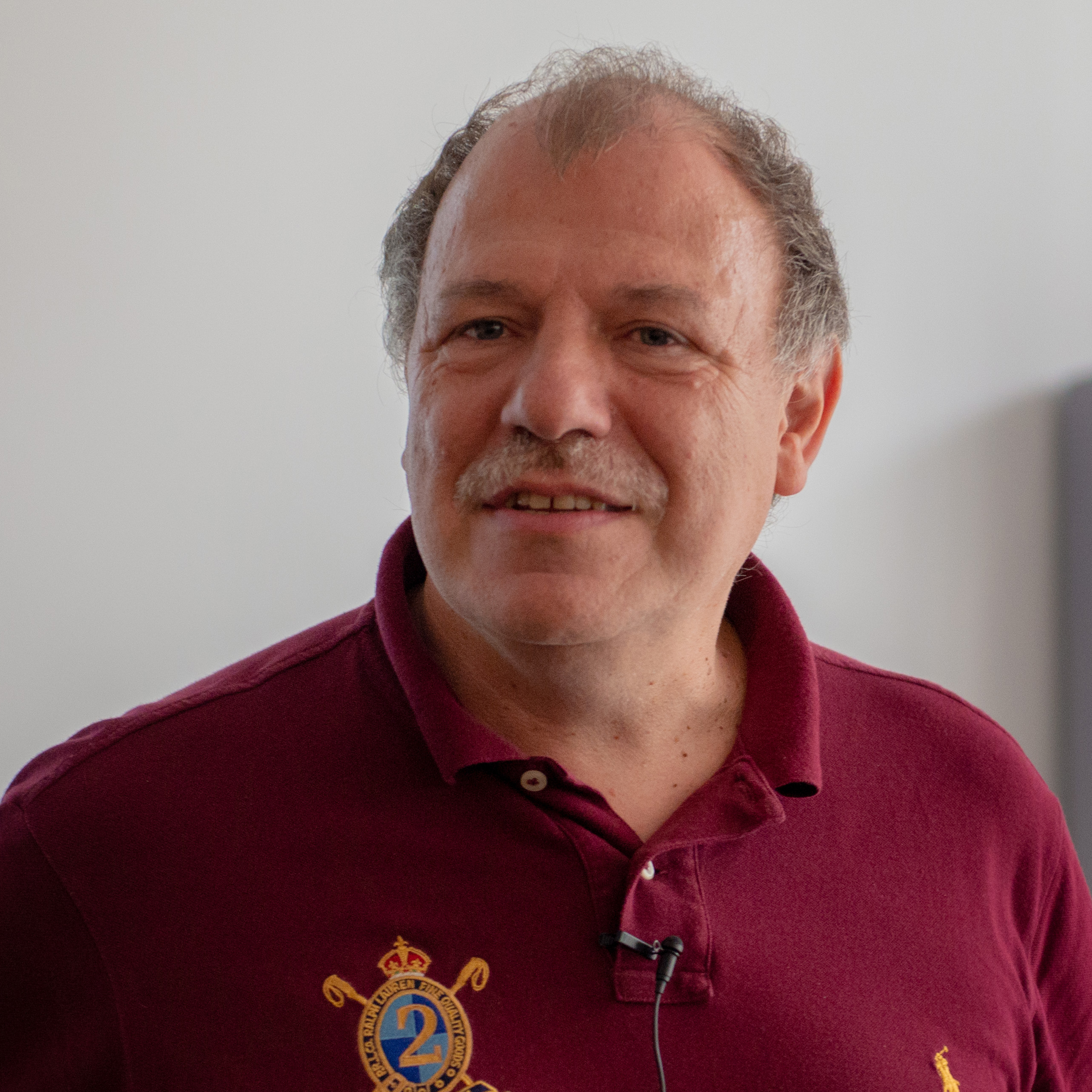
Knowledge Graphs for Robots that Act: Grounding Generative AI in the Physical World
Abstract
Generative AI can propose actions, plans, and tool sequences with remarkable flexibility, but physically acting agents face a requirement that language-based agents can often evade: their outputs must produce the intended changes in a particular world without unacceptable side effects. This talk presents the AICOR framework for cognitive robot manipulation, in which generative models supply statistically favored action candidates while knowledge graphs provide the structured, situation-specific knowledge needed to turn them into reason-warranted physical commitments. These graphs must represent more than objects and semantic relations: they must capture the robot’s embodiment, the current world state, task constraints, causal and physical relations, action capabilities, uncertainty, and the conditions under which an action remains valid. AICOR realizes this idea through semantic digital twins as dynamic, actionable world models; generalized action plans and action designators as procedural knowledge; and episodic memories as evidence of what occurred during execution. Together, these representations support prediction, querying, action parameterization, monitoring, diagnosis, recovery, and learning from experience. Examples from everyday manipulation illustrate a broader research agenda for agentic knowledge graphs: moving beyond knowledge retrieval and language grounding toward executable, continuously updated, evidence-producing representations that enable generative agents to act competently and accountably in the physical world.Bio
Michael Beetz is a professor of Computer Science at the University of Bremen, where he has headed the Institute for Artificial Intelligence since 2011. He leads the DFG-funded Collaborative Research Center "Everyday Activity Science and Engineering (EASE)", which focuses on enabling robots to perform complex, large-scale everyday manipulation tasks. Additionally, he serves as co-speaker for the high-profile "Minds, Media, Machines" initiative at the University of Bremen. Prior to this, Beetz held a professorship at the Technical University of Munich, where he played key roles in the Excellence Cluster "Cognition for Technical Systems (CoTeSys)", including vice-coordinator and co-coordinator of the "Knowledge and Learning" research area. In 2023, he was awarded the prestigious ERC Advanced Grant for the FAME (Future Action Modelling Engine) project, which aims to advance robotic understanding of human intentions. Michael Beetz has been recognized as one of the AI 2000 Most Influential Scholars in Robotics and is the fourth most-cited author in the field. He has also received an honorary doctorate from Örebro University and a German science award for retail business. He co-founded the award-winning robotics start-up Ubica and is a member of the IEEE Robotics and Automation Committee on Cognitive Robotics and the IEEE RAS Educational Board.Felix Sasaki (SAP)
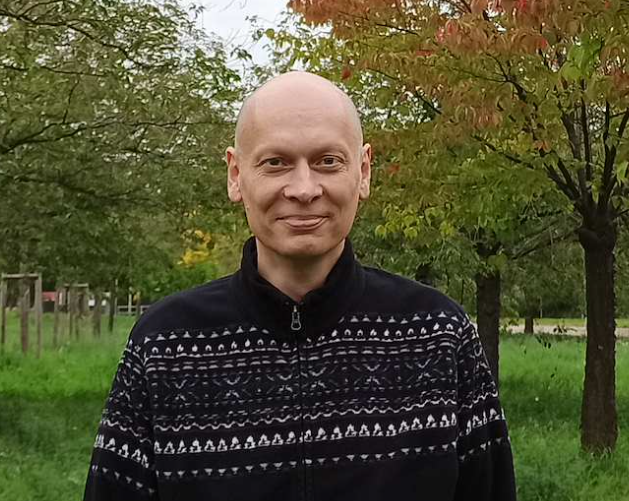
From API Metadata to Agent-Ready Ontologies: An Industry Research Agenda for Semantic Layering in Enterprise Knowledge Graphs
Abstract
Enterprise AI increasingly depends on grounding large language models and agents in reliable, structured knowledge. Yet most organizations still connect natural language systems to operational data through catalogs and registries that describe resources without capturing their meaning. This talk presents an industry research agenda for closing this gap through semantic layering: the semi-automated construction of an ontological layer on top of enterprise API metadata to support high-accuracy query generation and agentic reasoning. We motivate the problem from an industry perspective, contrasting emerging metric-level standards with proprietary ontology-first platforms. We then argue that enterprises need an open, standards-based alternative that avoids vendor lock-in while matching their semantic depth. Finally, we will outline concrete research goals, spanning from a semantic layer architecture over semi-automated ontology construction to a new benchmark dataset. The talk closes with open challenges including automation-quality trade-offs, schema evolution and integration with agentic AI systems as long-term memory.Bio
Felix Sasaki is Chief Expert for Knowledge Graph and Semantic Technology at SAP Business AI. He has contributed to various W3C activities e.g. in the realm of XML, Semantic Web and Internationalization, and coordinated EU projects advancing linked data for multilingual content processing. Before joining SAP, among others Felix held roles at DFKI and W3C and served as a full professor of business informatics at the Brandenburg University of Applied Sciences. His current focus is on the role of knowledge graphs for foundation models and agentic AI.Ralph Bergmann (University of Trier & DFKI)
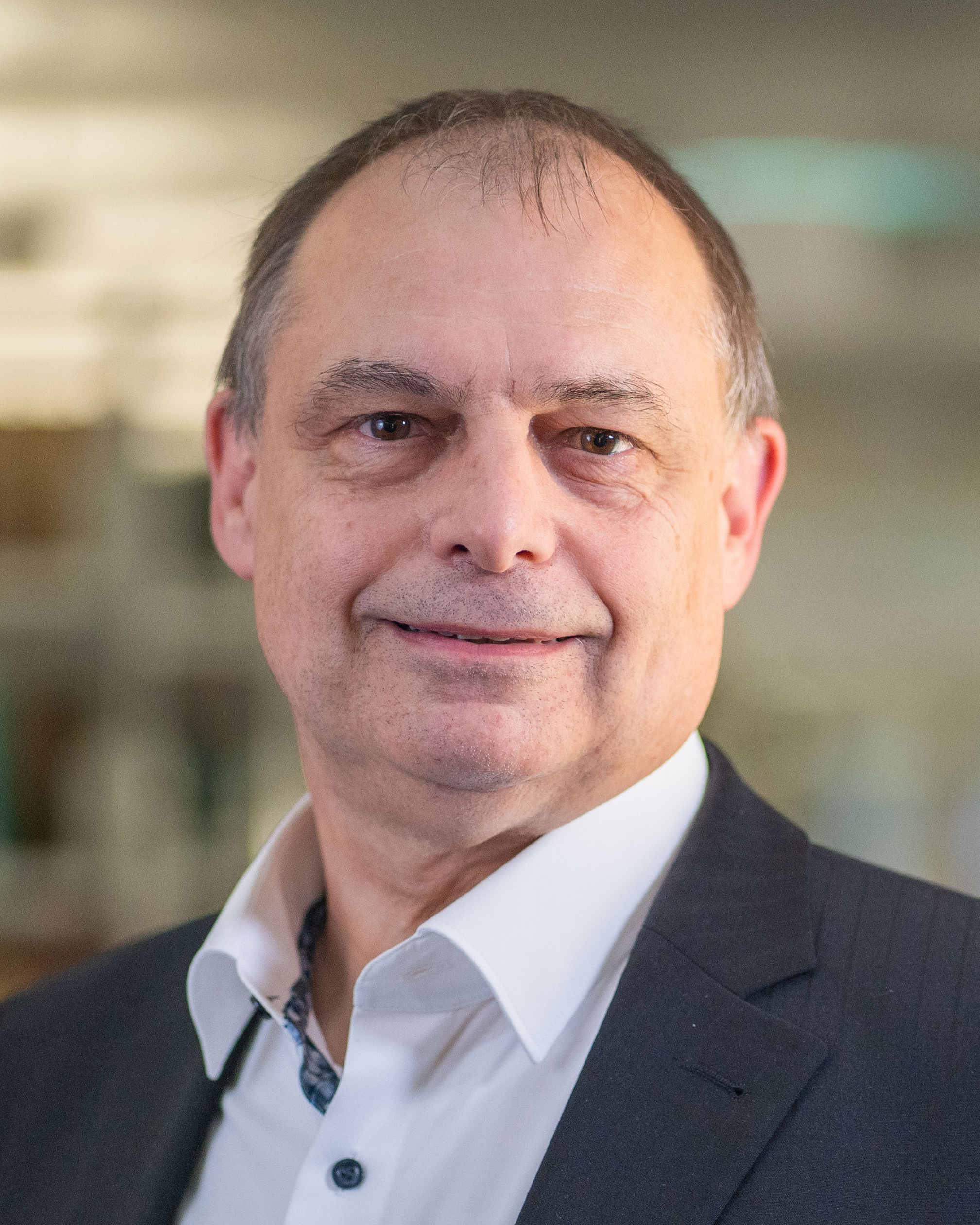
Bio
Ralph Bergmann is full professor of Business Informatics and Artificial Intelligence at Trier University and scientific director of the department Experience-Based Learning Systems at the German Research Center for Artificial Intelligence (DFKI). Over the past 35 years he has significantly contributed to the foundations and applications of AI across a broad range of topics, including case-based reasoning, knowledge representation, machine learning and knowledge-based systems. His current research on experience-based learning systems develops hybrid, neuro-symbolic architectures. They combine semantic technologies, ontologies and knowledge graphs with case-based reasoning, machine learning and generative AI. The aim is to build agentic systems that reason over structured knowledge and experience in an adaptive and explainable manner. Applications range from intelligent process management and industrial production to healthcare and energy management. Ralph authored more than 300 refereed papers, including four books and 13 edited proceedings volumes, and led more than 65 research projects.Makbule Gulcin Ozsoy (Neo4j)
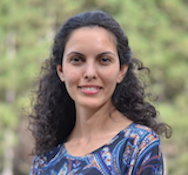
Bio
Makbule Gulcin Ozsoy is a Software Developer and Machine Learning Engineer at Neo4j, working on LLM-based solutions for interacting with graph databases and knowledge graphs. She holds a BSc, MSc, and PhD in Computer Engineering from Middle East Technical University (METU), Ankara, Turkey. Her broader focus is information retrieval and ranking. Nowadays she works on Text2Cypher: using LLMs to turn natural language into Cypher for querying knowledge graphs.Diego Collarana Vargas (Fraunhofer FIT)
Bio
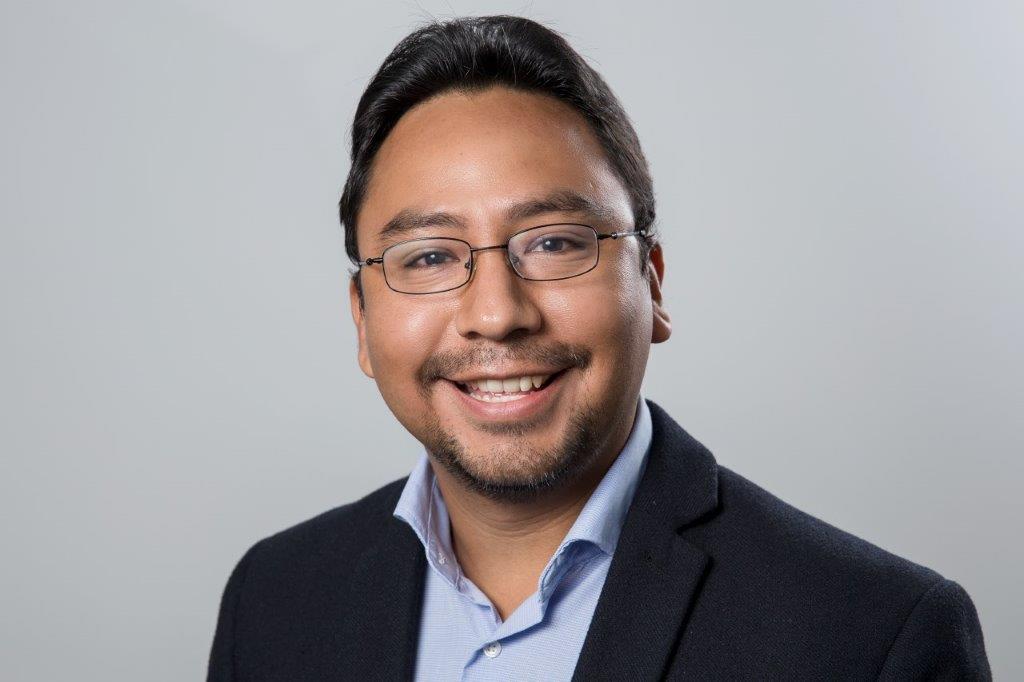
Dr Diego Collarana leads the Knowledge-Enhanced Data Analytics team at Fraunhofer FIT. He holds a PhD in Artificial Intelligence from the University of Bonn. His research focuses on neuro-symbolic AI, Graph Foundation Models, GraphRAG, and leveraging Knowledge Graphs as agentic memory for LLM-based agents. Co-author of the technical standard DIN SPEC 91526 on combining Knowledge Graphs and Language Models, he also leads major AI initiatives, including Jupiter AI Factory and WestAI. He is the recipient of the Google AI Faculty Award in 2020 and has authored more than 60 scientific publications in top conferences.Organizing Committee


Program Committee (Alphabetical Order)
- Abdulaziz Alhamadani (Florida Polytechnic University)
- Ali Pesaranghader (LG Electronics)
- Alsu Sagirova (DeepPavlov)
- Aman Mehta (Snowflake)
- Ankit Arun (Facebook)
- Ankit Arun (Facebook)
- Arun LN (University of Pittsburgh)
- Aswarth Abhilash Dara (School of Computer Science, Carnegie Mellon University)
- Baban Gain (Indian Institute of Technology, Patna)
- Bin Dong (Ricoh Software Research Center Beijing Co., Ltd. )
- Bonaventura Coppola (SAP Security Research)
- Brian Ulicny (RTX BBN Technologies)
- Cassia Trojahn (Université Grenoble Alpes)
- Chong Li (Nanyang Technological University)
- Daniel Benniah John (NetFlix)
- Daniel Dickinson (American Family Insurance)
- Daryna Dementieva (Technische Universität München)
- David Elson (Anthropic)
- Davide Buscaldi (Ecole polytechnique)
- Debmalya Biswas (UBS Group AG)
- Deborah Dahl (LF AI & Data Foundation)
- Derrick Higgins (Illinois Institute of Technology)
- Dong Zhou (Guangdong University of Foreign Studies)
- Duygu Altinok (Independent Researcher)
- Emir Munoz (Genesys Cloud Services Inc.)
- Enrico Daga (Open University)
- Ethan Selfridge (LivePerson)
- Femke Ongenae (Ghent University)
- Finn Nielsen (Technical University of Denmark)
- Georgios Alexandridis (University of Athens)
- Gilbert Lim (EyRIS)
- Giorgos Stoilos (Huawei Technologies Ltd.)
- Giuliano Tortoreto (University of Trento)
- Hai Wang (Amazon)
- Haïfa Zargayouna (Université Sorbonne Paris Nord)
- Hanna Abi Akl (INRIA)
- Hemant Misra (Simpl)
- Hideya Mino (NHK)
- Hyun-Je Song (Chonbuk National University)
- Ian Stewart (Pacific Northwest National Laboratory)
- Jiahe Huang (University of California, San Diego)
- Jiaying Gong (eBay Inc.)
- Jiyue Jiang (The Chinese University of Hong Kong)
- John Hudzina (Thomson Reuters)
- Kaige Xie (Georgia Institute of Technology)
- Kemal Kurniawan (University of Melbourne)
- Kushagr Arora (Bloomberg)
- Lawrence Moss (Indiana University at Bloomington)
- Leslie Barrett (Bloomberg, LP)
- Lori Moon (MoonWorks, Inc.)
- Lucas Pavanelli (aiXplain)
- Maeda Hanafi (International Business Machines)
- Manabu Torii (Kaiser Permanente)
- Marcin Namysl (Ringler Informatik AG)
- Marek Kubis (Adam Mickiewicz University of Poznan)
- Mark Steedman (University of Edinburgh)
- Masaaki Tsuchida (Tokyo University of Science)
- Matthew Dunn (New York University)
- Matthew Mulholland (Lattice)
- Mihaela Bornea (Oracle)
- Minoru Sasaki (Ibaraki University)
- Mithun Balakrishna (Morgan Stanley)
- Munira Syed (The Procter & Gamble Company)
- Nadjet Bouayad-Agha (Biorce)
- Naoki Otani (Megagon Labs)
- Oleg Okun (Writer and translator)
- Paul Groth (University of Amsterdam)
- Pengyu Hong (Brandeis University)
- Pierre-Henri Paris (Université Paris-Saclay)
- Pradyot Prakash (Meta)
- Rafael Anchiêta (Federal Institute of Maranhão)
- Ryan Wang (University of Illinois Urbana-Champaign)
- Sanjeev Kumar (Blazel Inc)
- Shailza Jolly (Amazon Alexa AI)
- Shihao Ran (Dataminr)
- Simona Frenda (Heriot-Watt University)
- Srideepika Jayaraman (IBM TJ Watson Research Center)
- Sudarshan Rangarajan (International Business Machines)
- Tanay Kumar Saha (Purdue University)
- Tianhao Shen (Tianjin University)
- Tong Guo (Alibaba Group)
- Tracy Holloway King (Adobe Systems)
- Vera Pavlova (burevestnik.ai)
- Vinod Goje (IEEE)
- Voula Giouli (Aristotle University of Thessaloniki)
- Wei Hu (Nanjing University)
- Wenjie Zhou (Baidu)
- Wenjie Zhou (Baidu)
- Won Ik Cho (Samsung Advanced Institute of Technology)
- Xiliang Zhu (Dialpad Inc.)
- Xu Jinan (Beijing Jiaotong University)
- Xueting Pan (Oracle)
- Yuwei Bao (Microsoft)
- Yuwei Yin (University of British Columbia)
- Zhengzhe Yang (Google)
- Zhixin Ma (Singapore Management University)
- Zhuoxuan Jiang (Shanghai Business School)
Sponsors
NFDI4DataScience (NFDI4DS) is a national research data infrastructure for Data Science and AI project.
The overarching objective of the project is the development, establishment, and sustainment of a national research data infrastructure (NFDI) for the
Data Science and Artificial Intelligence community in Germany. The vision of NFDI4DS is to support all steps of the complex and interdisciplinary
research data lifecycle, including collecting/creating, processing, analyzing, publishing, archiving, and reusing resources in Data Science and Artificial
Intelligence. NFDI4ds is offering a total of €2000 in travel grants (€1000 each) to two selected students who will attend and present their work at
GenAIK-NORA 2026! To be considered, submit your paper to the workshop, and if your paper is accepted, you’ll be eligible for a chance to receive one of the
two grants.
Please use this form to apply for the travel grant. The deadline to submit your application is June 30th, 2026.
Two students have been selected to receive the travel grant award!